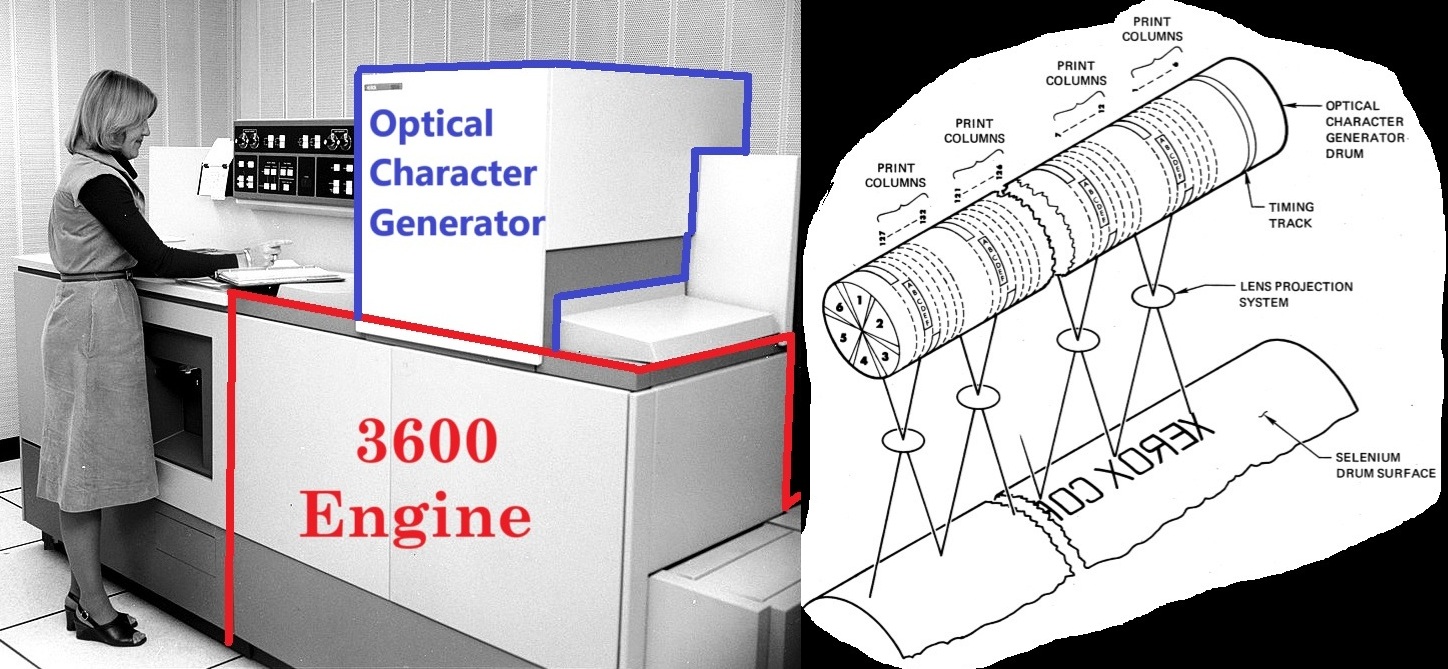
The Xerox 1200 Computer Printer, introduced in the early 1970s, was a unique machine in the xerographic lineup. Unlike other Xerox copiers and duplicators of the time, which used optical exposure of full‐page images onto a photoconductive drum, the 1200 used a character generator system with a light-modulating optical drum. This key difference in how characters were written onto the drum is the reason for its distinct design‐including its reversed polarity in charging and development.
This process scanned the page in raster fashion, forming complete lines of text via moving light rather than via mirrors or full-page projection optics.
In standard Xerox machines (e.g., the 2400, 3600), the photoreceptor drum was:
This reversal of polarities ensured that toner would develop only in the areas corresponding to the exposed characters, rather than in the background, resulting in sharp and clean character printing.
Summary
The Xerox 1200 was not a copier, it was a high‐speed electrophotographic printer designed for computer output.
It used optical light modulation and a spinning optical drum to expose characters directly onto the drum.
This system required opposite charging and development from standard Xerox copiers because it wrote with light instead of shadows.
The resulting print quality was very sharp for text, making it ideal for computer-generated documents, reports, and forms.