
If you look here, you would be right to initially think that the Grass Valley Company had plenty of spinoffs. There was only one. The chart shows that others who seem to have come out of Grass Valley were, in many cases, former GVG employees. They left for various reasons and chose to go out on their own. That is except for the one we will look at shortly.
Looking back, there likely should have been another one, and it should have happened first.
The first Olympic Games shown on TV in the U.S. were the 1960 Winter Olympics in Squaw Valley, near Lake Tahoe, and the Summer Olympics in Rome. These were done by CBS. CBS paid almost nothing for the rights at the Tahoe venue and paid only half a million for the games in Rome. In the Winter games, CBS let officials check the tape during a men's slalom event. They wanted to see if a skier missed a gate. CBS got the idea for instant replay. It first appeared in a form similar to today's in 1965.
ABC, the third network in a three‐network race back in the early 60s, had aggressively gone after sports as a way to delineate themselves. They couldn't out spend the others, but they got creative. When the 1964 Innsbruck Winter Olympics came up, ABC seized the chance. They offered over half a million dollars, much more than the $50,000 CBS spent for the 1960 Winter Olympics. In 1961, ABC brought in Jim McKay, a legendary sportscaster from CBS who covered the Olympics. With their skilled production team for Wide World of Sports, they were uniquely qualified to make a go of it. Due to the technology at the time, the 16.5 hours of coverage was recorded in black and white. It was then flown back to the states. Most events in Innsbruck happened in the morning. This timing worked well because of the seven‐hour time difference between Austria and the U.S. east coast. It allowed the events to be flown back and aired that evening.

The geosynchronous satellite for television wasn't ready yet. So, the only live event in the U.S. was a 15‐minute segment of the closing ceremonies. This came from the Telstar satellite, launched in 1962, which needed to be tracked as it passed over Europe.
ABC held onto the Olympics until 1988 and then lost the rights to NBC. The last Winter Olympics ABC aired cost them over three hundred million dollars.
As mentioned, ABC often looked to the Group as its engineering arm. ABC aimed for a new innovation for the 1980 Olympics: the 300 switcher. The 300 was in marginal shape at Lake Placid, but the TD in charge was very skilled. There were no visible issues on air.
ABC also asked for a special project. They wanted the Group to create a system to send video through fiber optics for the '80 Olympics. While extremely common today, it was a novel idea in the television industry in the late 70s.
Joe Maltz from ABC Engineering asked Bill Rorden if GV could take on this fiber project for the Olympics. Maltz assigned Eric Rosenthal, on the ABC side, to work with GV. Rorden subsequently assigned Birney Dayton to lead GV engineering.
The fiber system was used mainly for the opening and closing ceremonies. The run was about 1,500 feet, and it ran from the event center to the microwave link in downtown Lake Placid.
One additional project that ABC wanted the Group to do at that Olympics was a four‐channel audio transmission system. This was the group's first digital project. It was audio, not video. While the video fiber products were analog, this audio project was not. It was a 4‐channel multiplexer. It created a signal that fit into a video bandwidth. This allowed a video router to switch the signals. This was before the AES standard, so it used 4x video line rate for sampling. This system moved to the ABC Hollywood lot after the games. It stayed there until NVision replaced the router with an AES switch around 2005.
There was a 4th big project for the winter games. It was the 440 routing switcher. Dayton worked on all four projects. The audio project hinted at his future. Later, we will see that he ran a company that focused on digital audio for some time.
The news spread that the Olympics used digital audio. Reports said it increased stress for viewers. It was absolutely not true. All audio you consumed today through television transmission is digital. This digital product just plain worked and was extremely reliable. The group had very few problems making it. But it was too expensive to run digital audio. Analog audio was much cheaper, so they only sold a few units over the next couple of years. Eventually, they gave up on selling it.
Soon the group got a second order for a fiber system, this was the one at Epcot Center, to supply video to kiosks. Using fiber on long runs solved another problem, especially in hot Florida summers: lightning‐induced voltage spikes.
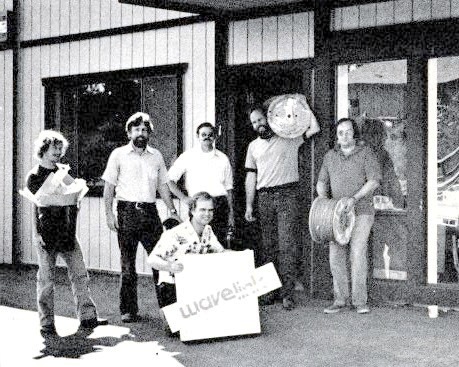
In 1983, Mountanos thought the group could make a business out of selling to the Telcos. He talked to Jerry Sakai, who managed the Modular Division, and Randy Hood, the Modular G.M. He persuaded them to let him start a separate operation in a building near Modular's. Many thought it was foolish for Grass Valley to enter the telco industry. Mountanos aimed to change the view that the company was only a video business. He wanted people to see it as a transmission business, too.
The company branded this effort Wavelink. As we have seen, Dan Wright, who was running the group at the time, wanted to "divisionalize" everything. He didn't want hybrid manufacturing to be centralized, like Dayton proposed. Dan Wright decided to remove Dayton from hybrids. He also chose to separate Wavelink operations from Modular. However, this wasn't called a division; it was simply called a group. It became known as the Telcom Systems Group. Dayton was still VP of Engineering. Wright believed that having this role as a group leader, rather than a division manager, would limit Birney's influence.
Dayton reported to Wright directly. Curiously, not to Jerry Sakai, who ran MPD, and had been the one originally sold on the idea. Dayton was not looking for the job. Mountanos was really upset. The optics seemed to him that Birney had lobbied for his job. Pete Mountanos started the Wavelink business and got it running. Then, Wright randomly put Birney in charge. Mountanos retired for a time, and expatriated himself to Thailand.
In the television realm, the Wavelink group only had modest success. At that time, broadcasters were not interested in fiber. TV folks didn't want to replace copper cabling with fiber. It was the telco industry that was pushing for fiber connectivity. Wavelink enjoyed success and had decent sales for several years. Sales got better after GV switched to single‐mode fiber.
After the first ABC Olympics digital audio system, GV's digital development stalled for several years. The company returned to digital development after starting work on Digital Video Effects (DVE) devices. Even the first Wavelink products were all analog. Early products were the 3290 (video only) and 3291 (video and audio) modules.
In 1985 the Group sold six 3290 systems to Los Alamos. These six were each on a different fiber, and in those days, there were commonly 12 fibers in a bundle of fiber. By the late 80s Wavelink had a laser version and was doing 20‐mile runs.
Until 1985, Wavelink used a Thomson multi‐mode laser. It wasn't very stable, leading to poor performance. The multi‐mode laser was replaced in late '85 with a single‐mode laser. While still a analog FM modulated product, sales to the phone companies increased.
Another player that we will see throughout the rest of the series is Chuck Meyer. Chuck went to work for Wavelink, in 1984. There he worked with Jim Michener and Dave Hershberger. While at the Group, Meyer worked on a digital audio project. It was an audio multiplexer that enabled transmission over T1 telco lines. Chuck didn't feel he fit in at the Group. So, he left in 1990. He then joined Applied Design Labs. There, he worked with Ron Milner, the founder, whom he had teamed up with before. Both Milner and Meyer had worked at Cyan Engineering. They did work for Nolan Bushnell of Atari fame. But his and Dayton's paths would continue to cross in the future.
As we will see shortly, in 1989 Birney Dayton left to found NVISION. Michael Pugh replaced Dayton as head of the Telcom Group. Pugh came from San Diego. There, he worked for a fiber optics company. He designed serial‐to‐parallel conversion ICs. He was recruited in 1989 but actually started in June 1990. His background made him a good fit to head the group's efforts.
Michael was eased out after a year. People felt uneasy with him in charge of engineering since his wife, Anna Greco, handled marketing for the Telcom Group. The Group and Michael parted amicably. After GVG, he then consulted with a company called Virtual Vision to do some chip design. He also consulted for Schilling Robotics in Davis, CA. They were makers of underwater cameras that attached to remote vehicles. He also worked as an engineer for a workstation company. He served as a representative on the fiber channel A/V committee. We will pick Michael's story back up in a later article.
Anna Greco, the other half of this two‐engineer couple, also started at the Group in 1990. She spent 10 years with the Group. She expanded her role at the Group. She moved from engineering to strategic marketing and business development for the Telcom Group. In 2000, Tektronix sold Grass Valley but kept the Telcom Group. It aligned with their business goals then, and she remained for a while. Like her husband, we will pick up her story again in a later article.
After Pugh, John Glass became the head of the Telcom Group. Jim Michener was the lead engineer.
Wavelink wasn't a big part of the Group's sales, but it had a outsized impact on the company. It led to several key players in the company leaving. By 1990, it became a $12 million business. Then, like the rest of the Group, it began to decline throughout the 90s.
Birney Dayton was an early proponent of HD. This was long before Grass Valley showed any interest in any digital formats, or anything HD related. As we have mentioned the Sony system was analog. He felt dismayed that the Group sometimes showed little interest in how future technologies might disrupt their business model. He was a witness to the meeting they had with Sony in 1985. He saw what others were doing in the digital and HD space. Besides the two digital islands in the company, Dubner and the Kscope lineage, it was all analog and standard definition.
Even when Bell Labs approached the Group to do R&D on HD, the majority of the company did not see the value. Dayton lobbied for some foray into digital, especially HD. He had the ear of Tom Long. Dayton considered Long a mentor. Long could see further into the future. He thought some of Birney's points were valid. However, he worried they might be too disruptive for setting up an HD R&D operation within the Group. He asked Birney if he could make a business out of his vision of the future. He said he could. Long arranged for Tektronix funding. This was at a time when many companies had venture capital funds. Tektronix's VC arm was called the Tektronix Development Capital, or TDC. TDC's investment was half in money, $2 million, and half in test equipment. Dayton promised Long that he wouldn't compete with the Group, which would be easy as the Group had no interest in HD. The company launched in 1989. This was the only Tektronix‐sanctioned spinoff ever from the Group.
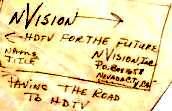
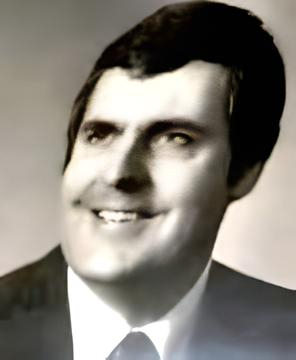
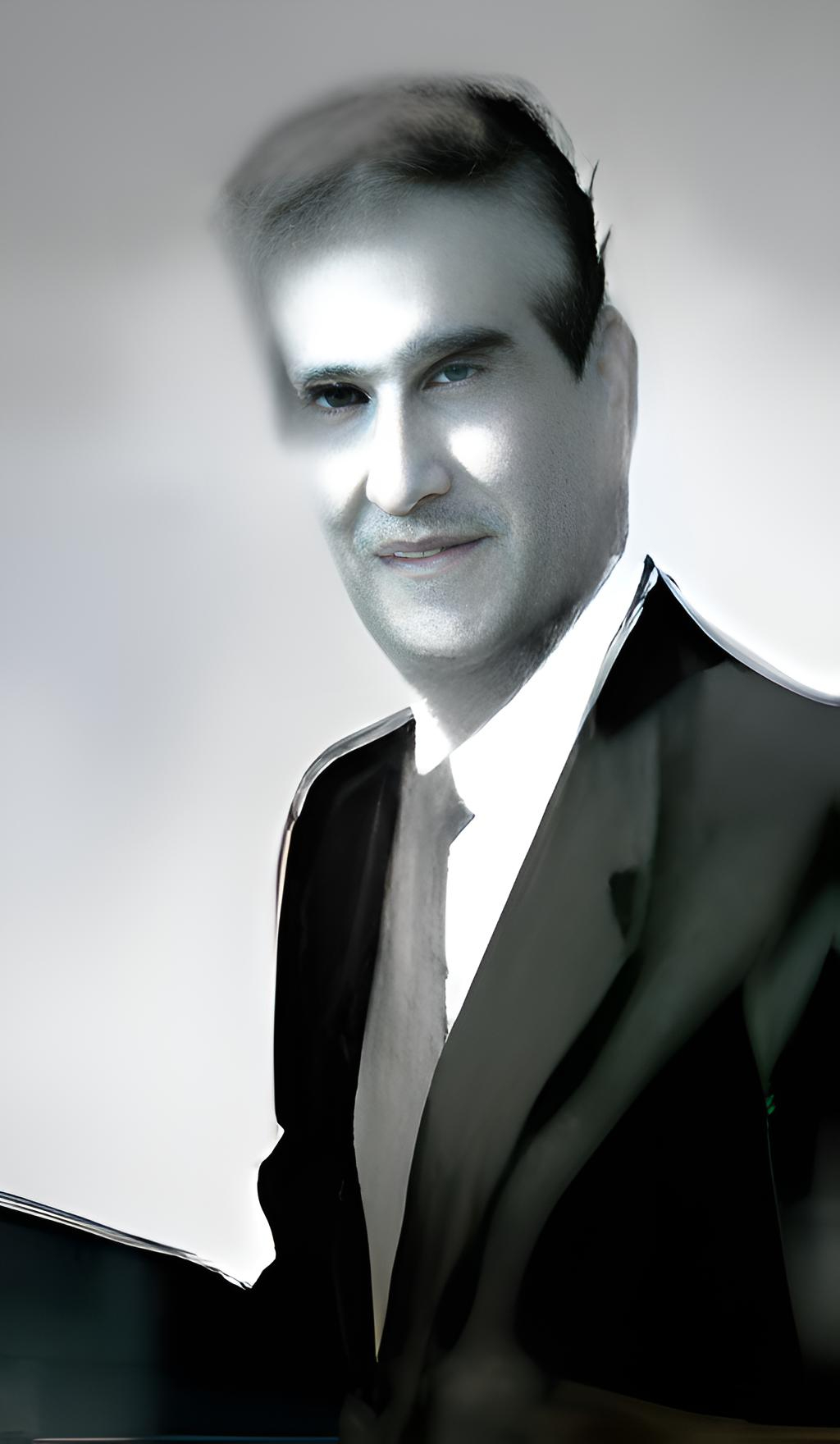
Besides Dayton and his wife Roni, Bill Amos, and Guido Galli were the founders of the company. Bill Amos was at one time the head of sales for the Sony Umatic line of VTRs. Amos started as a Philips salesman, focusing on camera imaging tubes. He later moved into the telecom industry. Then, Pete Mountanos brought him to Grass Valley, believing he would excel as a salesperson for Wavelink. After Mountanos left, Bill got to know Birney Dayton. When Birney started NVISION, he brought Bill along. Amos oversaw the new company's sales. Guido Galli oversaw manufacturing.
Galli had a doctorate in physical chemistry. He held multiple patents for computer memory, especially bubble memory, and inkjet printing. He had worked at IBM before moving to Intel. Birney had talked about going off to start his own company while at Grass Valley. Mountanos was also instrumental in Birney meeting Galli. Galli had ties to a venture capital firm. Before Mountanos finally decided to leave the group, he was trying to get Birney to leave. His hope was that Galli could lead him to startup money.
Bob Plumber and Larry Thorpe of Sony were poised to come on board. Birney knew Thorpe and Plumber from the ACATS committee. They were ready to join as founders. Thorpe would be VP of Engineering, and Plumber would be VP of Marketing. Thorpe started at RCA. He played a key role in the TK‐47 camera we discussed elsewhere in this series. He came to Sony as their camera guru for Sony America. But both backed out before the company started. Thorpe was influenced by Akio Morita, a founder of Sony, who flew to the States. Morita greatly increased Thorpe's role at Sony. Plumber, meanwhile, decided to accept an offer from Sarnoff Labs. Plumber was Chief Engineer for KOMO, Seattle, at the time.
Jerry Sakai spent some time at NVISION. Galli left the startup because he didn't like small‐batch manufacturing. Sakai, as we saw in earlier articles, was more interested. Another early member of the company was Chuck Meyer, who joined as a senior engineer 1990. Initially, Dayton was a bit leery of Meyer because he did not stay long in his first stint with the group. In 1993 Chuck moved up to VP of Engineering.
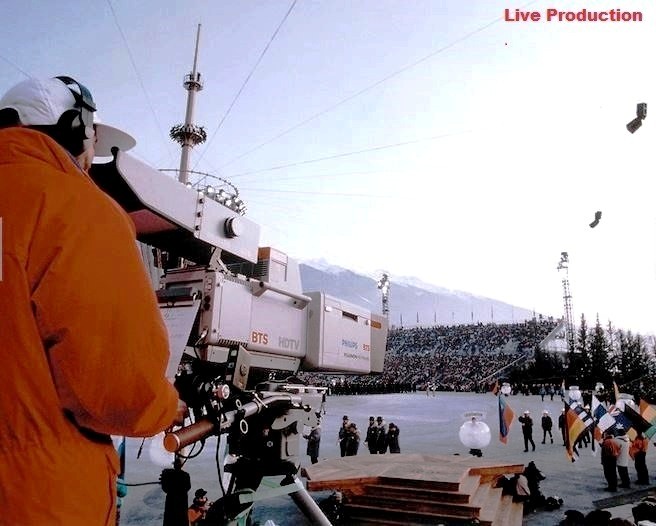
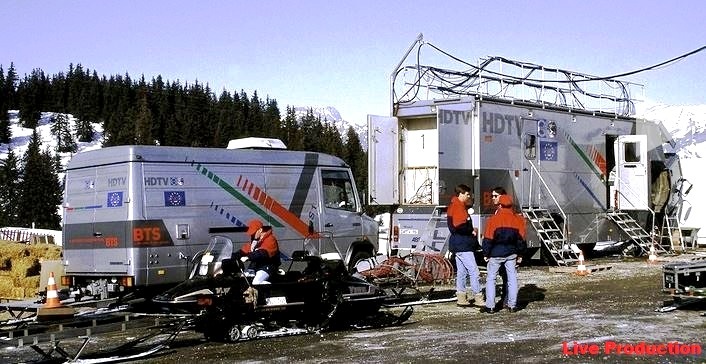
In 1992 at the Albertville Winter Olympics, HD was used for the first time to cover a large sporting event. It was a joint effort between Bosch, Philips, and Thomson; the joint company was known as BTS. All four of these entities would come to be a big part of the Grass Valley story. BTS brought nine HD production trucks to the event. This included two 6‐camera vans, one 4‐camera van, and two 2‐camera vans. They also had an edit truck, two slow‐motion units, and a master control unit. They also built a two‐camera studio facility.
This HD system was still analog, not digital. Quality was better than standard definition. But not enough to justify the cost. Receivers and monitors used CRT technology. This made them large, heavy, and very costly. Also, many thought the new 16:9 aspect ratio (4:3 was the traditional one) was too exotic. But aside from a few demonstration projects, not many wanted to make the investment that HD needed. Plus, who would watch it? There was no way to deliver it live to the home, and in 1993 HD receivers were in the $15,000 range, in '93 dollars. BTS disbanded the units in 1996.
From the get‐go, it became obvious that HD was not ready for primetime. Instead, high‐end TV and audio production houses, plus Hollywood, were finding a new type of high‐definition audio. AES audio. AES stands for the Audio Engineering Society. They created a digital audio standard. Many in the industry found digital audio harder to grasp than digital video. Many things were foreign when comparing analog audio to digital audio. Levels were measured differently. The digital audio signal had much more extra data than video. In addition, our ears are much more unforgiving, at least among audiophiles, to minor imperfections in digital audio than in digital video.
Sony had the deep pockets to patiently build up a need and demand for HD video; it continued along that path. It was helpful that NHK, about the only customer that Sony would listen to long‐term, also wanted HD. NVISION had no such resources. They looked for products to keep the doors open. They thought about making a better audio product. It would be like one Dayton had worked on at the Group that used fiber. That work soon morphed into what was known as the NV2000. It moved ten audio channels in a 6 MHz video channel. Chuck Meyers flew all over the US trying to sell it, with very limited luck. KSL in Salt Lake City finally bought one in 1991. That was the company's first sale. But they soon found that there wasn't a market for it.
The very first request for a product was from Frank Wells & Glen Meadows of Masterfonics. They were looking for analog audio to AES converters (and AES to analog converters). NVISION designed its converters to fit into the NV‐1000 frame. That is the frame that housed the NV‐2000. This was the launch of the company's modular product line.
Al Hart and Bill Womack of Modern Video Film in 1991 asked the company if they could provide an AES router. NVISION designed the NV3512 and launched in 1991. The first two went to Modern Video Film, and Henninger Video Productions.
But there was another market that NVISION was about to stumble upon. Again, a request came from Modern Video Film while Meyer was there trying to sell the 2000. They said that they did not know what to do with the 2000, but they mentioned another need.
To maintain audio quality in digital sound, it's crucial to sync AES audio properly. This was a new concept with regard to audio. This helps avoid "clicks and pops" when changing audio sources. Sync generators for audio? Some old‐timers found it blasphemous. But when correctly done, AES digital audio made for much better sound.
Al Hart from Modern Video Film spoke with Birney, and said they needed a timing generator to fix the issue. They developed a product called the NV1080. It locked to the video reference and generated a 48 kHz AES clock signal. They sold that product for five years. That is, until Tektronix released a new product that combined video and audio timing in one box.
Hollywood was a major buyer of these products. They mainly used them for digital audio mastering. Meyer said he liked Hollywood customers. They respect creative types more than hard‐nosed broadcasters usually do. NVISION did very well with the Hollywood types.
Facilities sought an easier method to reconfigure machine control in edit bays. At the time, editing was not done on a laptop or even a desktop computer. It included two or more VTRs, a video switcher, an audio mixer, and a stand‐alone editor. This editor was usually the only computer in the room. The editor controlled the VTRs and other equipment associated with the editor. Often, what machine was currently under the control of an editor needed to be changed. Before that, you had to either patch a cable or unplug it from one machine and move it to another.
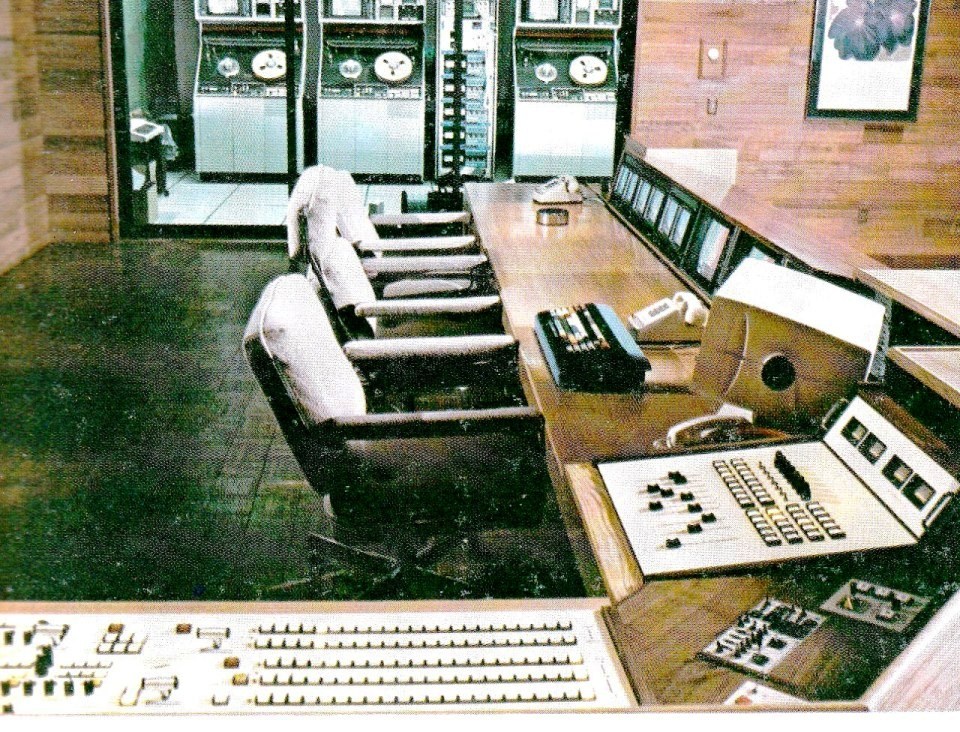
Glen Meadows wanted a data or machine control router, and he eventually called Tom Crabb, an NVISION engineer, and said come on down. Meadows had an idea for a solution to the issue. He asked why an analog video or AES router couldn't be modified to be a data router? Jim Varney and Bob Fry asked Meyer if they could make an audio router into a control data router. Together with Chuck and Tom Crabb they simulated it with a NV3512 audio router. They had a hit on their hands. NVISION sold data routers to everyone but Grass Valley.
What put NVISION into the black cash flow‐wise in 1996 was a system from AT&T called DisQ. It let an engineer use a familiar desk (mixer console), like the SSL 4000 or a Neve VR, as a control surface. They could mix entirely in the digital domain. This was before digital consoles were common. The system used a RISC computer to interface with the analog board control surface. Each of the analog mixers' I/O used an NVISION converter. For a while, NVISION was selling lots of converters. The DisQ system nailed several aspects that big digital desks later had to relearn. One key feature was delay compensation.
Birney chose Chuck to define the digital audio product line for marketing, in addition to his engineering duties. So, he worked on creating a catalog and application notes, which then led to the writing of the first "The Book."
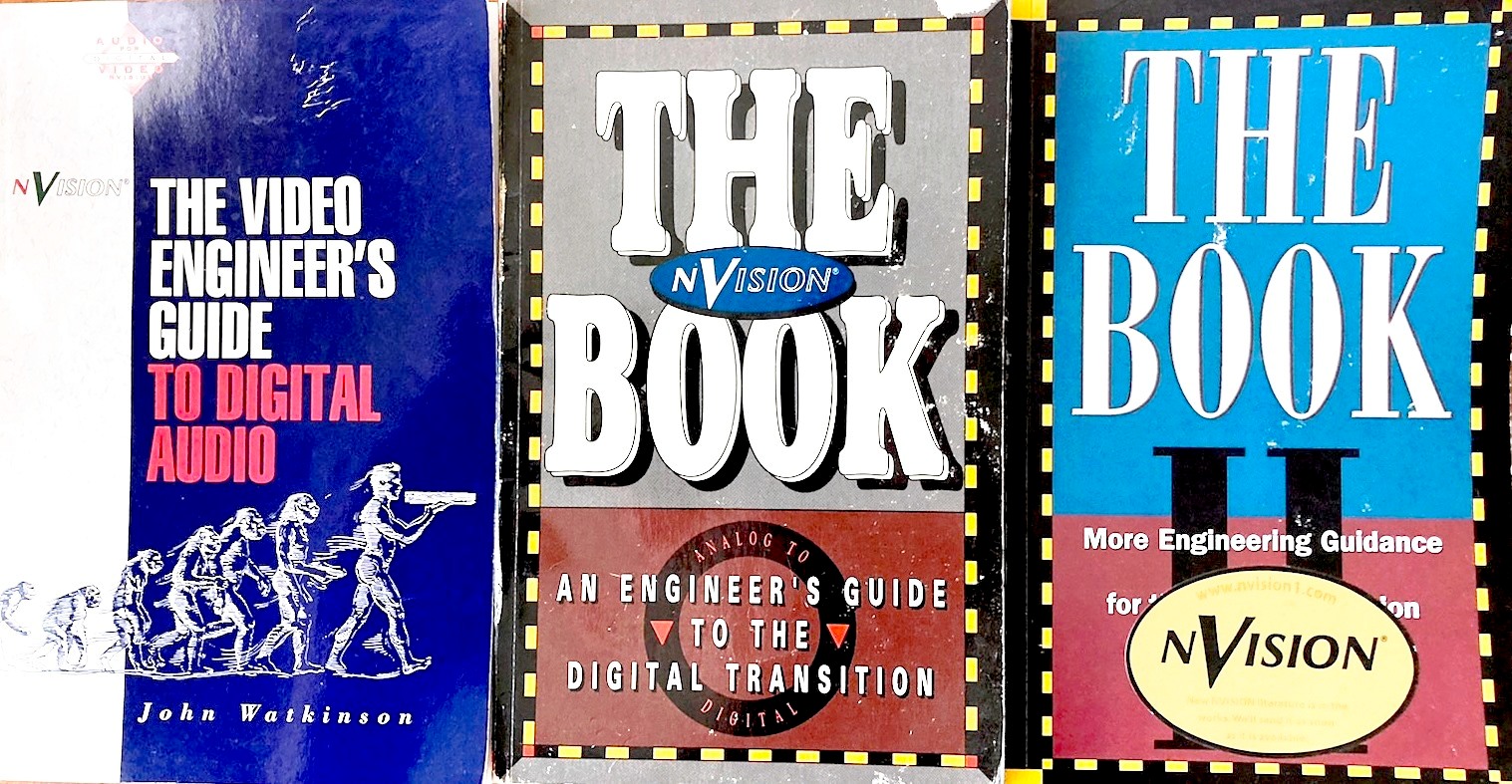
Meyer and the NVISION engineers created the application notes. Meanwhile, John Watkinson, who wrote "The Art of Digital Audio," agreed to turn these notes into NVISION's "The Book" in 1994. The Book starts off with shorter versions of his first two chapters from the "Art of" book. The "Art of" book dives deep into engineering details. In contrast, the NVISION book focuses on practical skills for technicians. The book was edited by Nigel Spratling, who had become the VP of Marketing at the time.
The book positioned them as the digital audio company. The conversion rate to sales from the book was high, many trade magazines reran the app notes. One of those books made it's way to Sony Atsugi to help them get their machine control protocol correct in their product.
The second edition of the book appeared in 1995. It now had all NVISION app notes in chapter form. It had higher production value and glossy pages. It included a few chapters on video. These few chapters highlighted the ongoing importance of audio and machine control for the company.
The final edition of the book was published in 1999. Dolby played a key role in digital audio signal transmission. Steve Lyman from Dolby contributed significantly. Geoff Ward wrote the Machine Control chapter, while Paula Gleicher focused on fiber distribution. Rob Bowdish created many diagrams, and Jill Mahanna handled the editing.
By 1992, NVISION, spun off three years earlier from Tek, needed another cash infusion. Jerry Meyer, the President of Tek at the time, had no interest in anything small. Meyer was known for having little patience, especially towards the Group. NVISION scrambled to find another investor, which they did. Dayton approached Jim Meadlock. He knew Meadlock from his time at the group. We will see that connection in the next article.
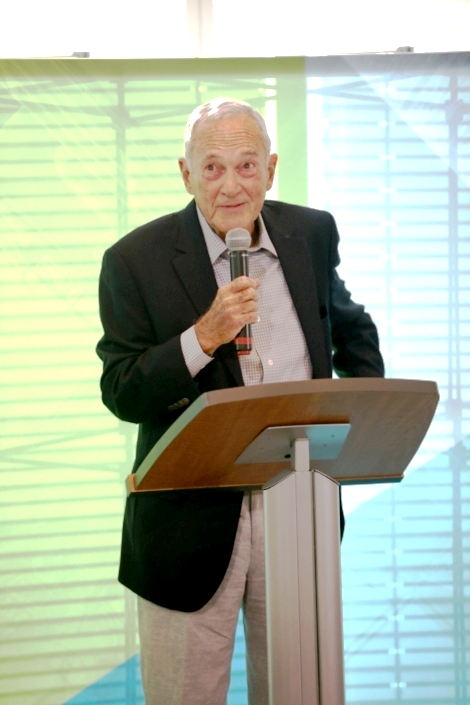
Meadlock had run Intergraph, started by former IBM engineers in 1969 as M&S Computing, Inc. Jim Meadlock, his wife Nancy (the M), Terry Schansman (the S), Keith Schonrock, and Robert Thurber founded the company. Thurber worked with NASA and the U.S. Army. He helped develop digital systems for real‐time missile guidance. In 1980, the company was renamed Intergraph Corporation.
Intergraph's key hardware project involved creating a line of workstations. These used a computer design from Fairchild Semiconductor. They also developed their own version of UNIX for their workstation. In 1987, Intergraph bought the Fairchild division that made the chip. Their design was based on a Fairchild chip. The Fairchild product wasn't very popular, so they wanted to keep it available.
Their Unix product became a big moneymaker, but not in a traditional way. In 1997, Intergraph sued Intel and other hardware makers. They claimed these companies infringed on their intellectual property. The company secured major settlements with Intel, HP, TI, and Gateway, racking in over $394M. In 2000, Intergraph sold its graphics accelerator IP to 3Dlabs. It also sold its workstation and server division to Silicon Graphics. This move made Intergraph a purely software company.
On November 29, 2006, Intergraph was acquired by an investor group taking the company privately until 2010, when Intergraph was acquired by Hexagon AB.
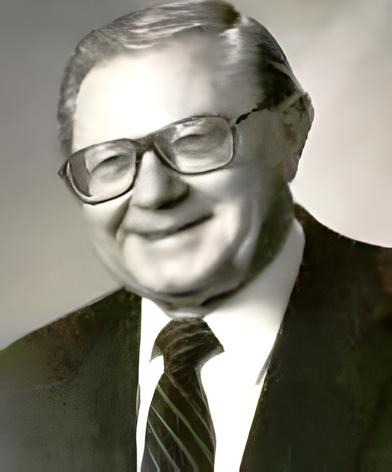
Meadlock was born in 1933. He earned a Bachelor of Science in Electrical Engineering from North Carolina State University in 1956. He managed a department at IBM before forming Intergraph. There, he served as Chairman of the Board and CEO.
NVISION approached Tektronix's board for extra funding, but the board refused. By then, some people felt resentment. They were upset with Tektronix and the Group for funding NVISION and not keeping it within Grass Valley. Jim Meadlock put money in and watered Tektronix shares down. Meadlock wrote a personal check for $1 million. Tektronix held fast in choosing not to invest any more than its initial outlay. Eventually, Meadlock virtually washed down Tektronix shares to 0.5%. Meadlock felt that you had to pay to play. Meadlock had about $4 million in NVISION when he was done.
Eventually, NVISION bought the building (the last GV building) seen in chapter one. It was bought with earnings and an SBA loan. The price was $2.7million. Ironically the same amount the building was sold for almost 30 years later.
Finally, in 1997, NVISION began the development of their first HD product, a router. At this time, SMPTE was nearing the completion of its HD‐SDI standard, which was finalized in 1998. The standard was actually two standards. Setting the stage for the infamous 720p versus 1080i battle. Were more pictures per second, or higher resolution the answer?
ESPN and Fox, both focused on sports, preferred more pictures per second. This improved their replay presentations. ABC and Disney also went with 720p, mainly to stay in lockstep with their ESPN subsidiary. CBS, NBC, and PBS chose higher spatial resolution.
This division would continue until recently. Technology is finally solving this issue. In 2018, SMPTE combined the best of each standard into one: SMPTE ST2082, also known as 1080p.
The HD transition took off in late 2002. That's when ESPN and Turner launched their HD cable channels.
In 1997, Dayton allowed Meyer to spend $250,000 for HD test and development equipment. Gennum had developed a HD transceiver IC that did reliable HD re‐clocking. But the design of a router frame turned out to be more art than science. So, the internal connections needed careful placement. Because of the high frequencies involved, the whole router cabinet was built using RF transmission rules. Smaller HD routers performed better. They had less dielectric and other losses due to shorter paths.
Their first HD video router was 16x16 (with no reclocking) in late 1997. Others followed quickly.
In 1998 NVISION HD routers were available in three sizes:
64 square (64 inputs and 64 outputs)
128 square
256 inputs by 128 outputs.
The problem was that they each had their own set of issues when it came to moving video data, with all its RF energy.
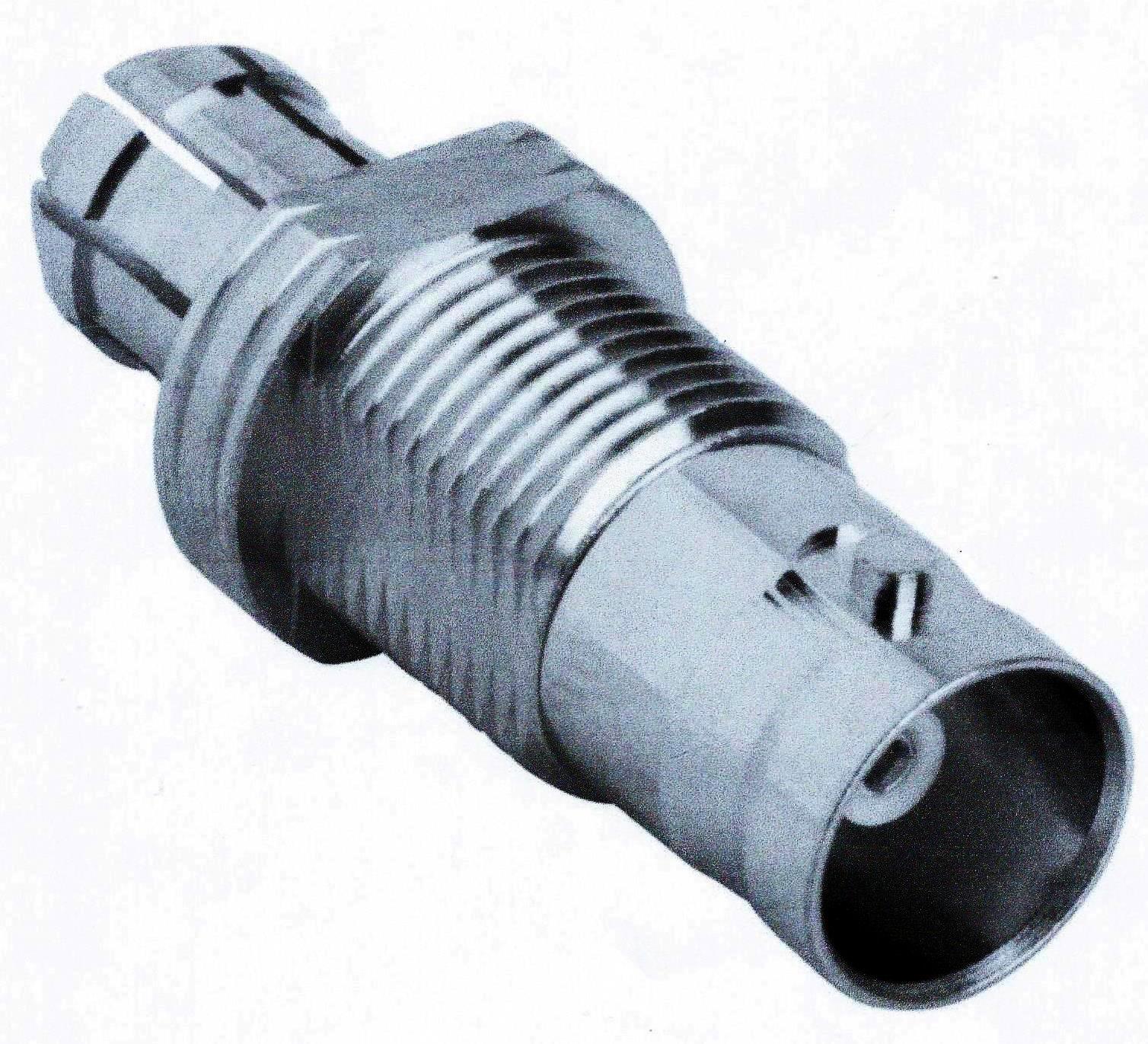
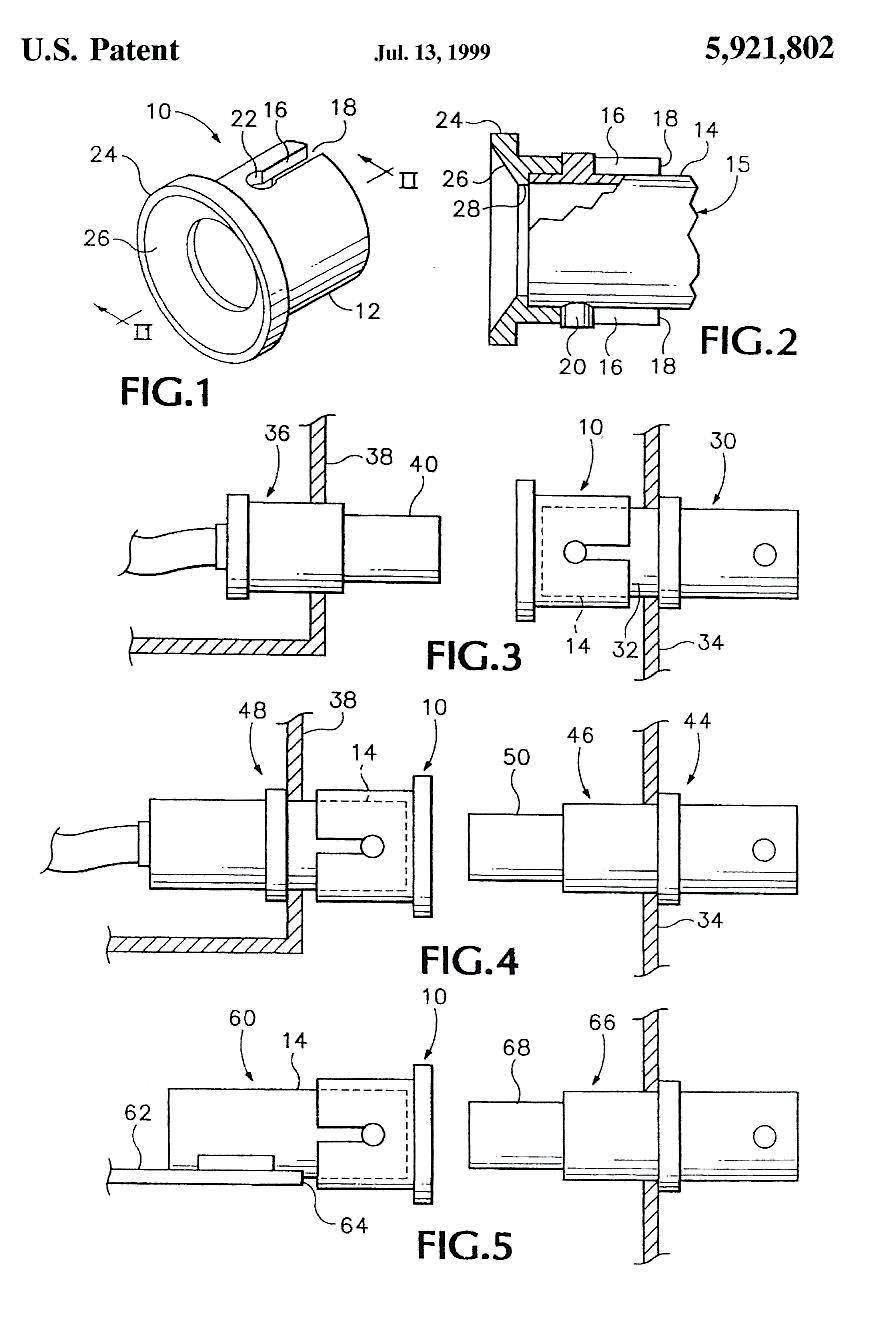
The engineering issues to produce a HD router were huge. At that time, it was believed that there couldn't be active components on the backplane board. This is the board where all the cards plugged into. That is not the case today, but in the late 90s it was. Also, due to the high frequencies, the tolerance for coax edge connectors was very tight: +/‐1mm! Coax connectors on the boards had to blind mate with the backplane input and output connections on the router's back.
Bruce McChesney found a ready‐made connector. It had a flange on one side and a standard BNC connector on the other. The flanged side lets the board's connector align on its own when plugged into the frame. NVISION created an adapter to fit over a BNC connector. It performs the same function, as shown in the patent drawings. Chuck Meyer, Dan Reiswig , and Scott Matheson received a patent for it.
Their video routers were made out of steel. The NV 3512 audio router had an aluminum frame for thermal conductivity because it was fanless, but the video routers had fans. NVISION chose to keep the process of building a reliable HD router secret instead of patenting it. They believed they were ahead enough to skip patenting the processes. Instead, they chose to keep them as trade secrets.
NVISION didn't have a physical HD router before the 98 NAB. Instead, they created a notebook binder. This binder showed and described their reliable process for building HD routers. The effort was enough for CBS to place an order before the convention. CBS then announced their purchase. This was done to get others on board. The intention was to keep NVISION in business.
NVISION sold its first five 6128 series HD routers in 1998. Two to CBS, one to Sony for a production truck that ended up with PBS, one to ABC, and another one to PBS. By the turn of the century, NVISION had only sold about 50 HD routers. At the time, the big dollars were going to build websites and ATSC DTV buildouts, not to HD. This was the run‐up to the dot‐com bust. A lot of those routers ended up in Hollywood.
Another early HD product, which was to foreshadow what was to come for the company, was at the 1998 NAB. There it showed products that plugged into another company's frame, the Miranda Densitè. NVISION supplied the audio multiplex cards this fiber product. They fit into Miranda's frame. There were only 10 customers. Disney used it in the movie 102 Dalmatians. NBC used it for a soap opera in Los Angeles, and Industrial Light and Magic used it in a few projects.
In 1999, NVISION got out‐marketed by Tim Thorsteinson and Grass Valley. Thorsteinson was involved with the Group more than once. This was his first stint with the company. The problem he faced was that the Group still did not have any HD product to speak of. The company had a key advantage. Many in the industry believed HD would never appeal to viewers enough to buy HD receivers. Broadcasters also faced a decision regarding the new digital transmission system. It allowed for a full‐throated HD program, or multiple SD programs at the time. Additionally, broadcasters had to spend an average of one and a half million dollars to meet the new digital standards from the FCC. So, the dilemma was multiple SD programs versus a single HD program. The question was which would recoup the investment back faster. Many thought more was better. For broadcasters and many program providers, sports have always been the dominant force. ESPN chose the path forward for many by mandating that all programming vendors provide HD content. But that was still three years in the future at that point.
Besides not having HD products that were shipping yet, the Group wasn't doing digital audio yet. They used NVISION audio cards in their master control switchers. They bought NVISION digital audio routers if a customer needed a digital audio routing layer. At one point, Grass Valley sent Ken James over to NVISION with a proposal. The Group offered to buy all of NVISION's production output. That is, the Group would be the company's sole customer. That was rejected out of hand.
Thorsteinson proposed the idea within Grass Valley that the Group should buy NVISION completely. A number as high as $35 million was thrown around. Dayton and the other principals at NVISION declined the proposal, backed by Meadlock. It would have been a bad financial deal for everyone except Meadlock. Dayton and his team only had stock options that hadn't vested yet. To return to the Group, they likely would have moved the options into Tek stock, which was falling at that time. Little did the NVISION folks know that soon those options would be in even greater danger.
Thorsteinson took action to slow customers from moving to vendors with HD products, especially NVISION. He started telling customers that they did not need HD yet. Simply buy SD gear from Grass Valley, and they would swap it out when the customer needed to go HD. At the time, NVISION's HD equipment was the same price as Grass Valley's SD. Many had a long history with the Group, but NVISION remained a mystery to many. Grass Valley had blown it, and this was the only recovery strategy they had. GV was working on HD (a router, switchers, and modular products), but at this time they had nothing that could ship yet.
Another potential NVISION suitor also sniffed around. Someone who would soon play a role in the Group's history, Terrance Gooding. In the end, Dayton concluded that he just wanted to see NVISION's books.

As HD began to gain traction, another trend made things trickier. It started in 1993, when Mosaic, the first of a slew of web browsers to follow, was launched. Now many more people were starting to regularly use the web. Now a new business model was born. Set up a website, grow quickly by building brand awareness, go public. The plan was that the investment from people buying the stock would allow the company to survive long enough to find success. All that had to be done was to keep its cash burn rate low enough until it figured out how to monetize its popularity. Most of the startups flamed out before that happened. The list is long: Napster, Pets.com, Kozmo, Broadcast.com, WebVan, are a few that came with the dot com run‐up and then disappeared. Some biggies today survived. Amazon was started in '94, eBay in '95, Google in '98.
The ones that got through had a clear goal: to be the world's largest store, meeting place, or search engine. If they made progress on those goals, investors and financial institutions rewarded them with high stock prices and low‐cost capital. Those companies used the money they received to enhance their services. They also funded companies that generated profits.
Amazon started by selling books and other e‐commerce items. During that time, it acquired 40 companies. But it also acquired 71 companies outside its originally intended business. Today, many of those acquisitions are part of Amazon's cloud computing business. This sector is its most profitable.
As mentioned, most did not, but investors saw the meteoric rise of stocks in the sector and wanted to cash in. In 1996, Fed Chairman Alan Greenspan warned of "irrational exuberance" during a speech about the growing Internet bubble in the stock market. What helped fuel the run‐up was that the top income tax rate had dropped in 1997, and interest rates were low. More people felt they had the money to invest. Investment banks made a lot of money from IPOs. They drove speculation and pushed investment in technology.
As the bubble peaked, dot‐com insiders sold $43 billion worth of shares from September 1999 to July 2000. This was double the amount they sold in 1997 and 1998. It peaked in March 2000. In that month, nearly 2,500 venture capital deals took place. They involved almost $35 billion.
On March 20, 2000, Barron's had a cover story called "Burning Up." It warned that Internet companies were quickly running out of cash. Many were headed for bankruptcy. Just one month after peaking, Nasdaq had lost 34.2 percent of its value. From 1995 to 2000, Nasdaq rose over 500%, and by October 2002 had plunged 74% from its peak, giving up almost all its gains. It was later estimated that between 2001 and early 2004, Silicon Valley alone lost 200,000 jobs. In just ten years, a group went from young innovators who "got it" to world changers, then to being completely unnecessary. Some argue that the dot‐com era was set to fail. There were too many companies competing for too few users.
There was a silver lining: the money invested in tech companies built a strong infrastructure. This foundation helped the Internet grow and mature.
But that came at a cost. The telecoms industry had a bubble. The Economist called it "the biggest and fastest rise and fall in business history." An example was Qwest. Qwest started in 1988. It was founded by Philip Anschutz, who owned the Southern Pacific Railroad then. He set up a subsidiary named Southern Pacific Telecommunications Company. It found a way to lay fiber along railroad rights‐of‐way at eight miles per day. An unheard‐of rate. It used a $1 million, 76‐ton rail‐mounted plow that laid the cable next to the rail line at a depth of four to five feet. Qwest built SONET OC‐48 (2.5 Gbit/s) fiber rings across the country. These rings connect at many switching points along the way. The first was close to Grass Valley, between Sacramento and Los Angeles.
An interesting issue has returned to challenge companies like Qwest and AT‐. In some cases, courts decided that railroads don't own the land. They only have the right to run trains there, not to lease it for other uses. This has resulted in some large sums of money changing hands.
Southern Pacific Telecommunications Company sold fiber strands in each bundle to fund two 78‐strand fiber bundles per ring. The fiber network was 18,500 miles long. In 1995, the SP subsidiary was spun off and assumed the name of Qwest. It went public later that year. In 2000, it bought the spun‐off baby bell U.S. West and rebranded it Qwest also. Qwest, like many other telcos, believed the dot‐com boom would last. They thought the demand for fiber capacity would rise quickly. It never happened, and the majority of Qwest's fiber strands are still not in use.
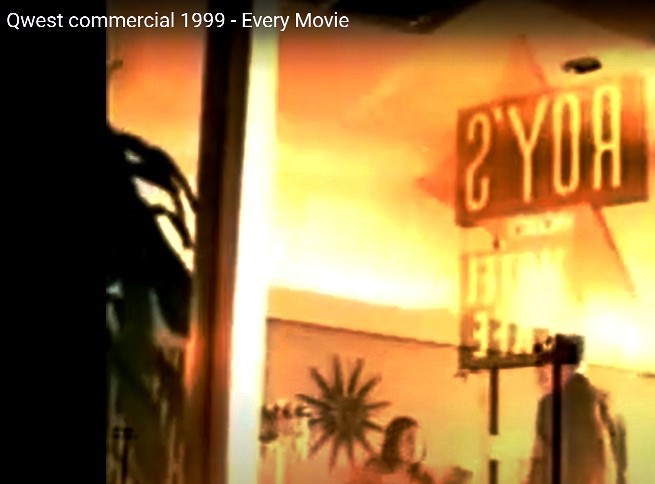
The capacity was huge. In 1999, the company ran a TV ad. A guy goes to a rundown motel and asks if the rooms have entertainment. The clerk replies, "'any movie ever made, any language, anytime." While true, the qualifications were standard definition. Anytime meant that any desired movie would start every minute, not necessarily anytime.
The telecoms bubble and crash cost investors almost a trillion dollars. Greed and excessive optimism can lead to unrealistic expectations about data traffic growth. This is especially true with the rise of the Internet. This would come to affect NVISION into the new century.
There was a downturn in the television industry as the dot‐com run up was occurring. As we have mentioned already, over the air digital TV was lighting up at this time. A good part of the broadcaster's budget was going to buy new transmitters, antennas, and towers. That was sucking up a major chunk of the broadcaster's technical budget during that time.
The other big obstacle that faced companies like NVISION was the web. Everyone, from big broadcasters to small "mom & pop" ones, now needed a website. By the end of the century, broadcast equipment vendors heard customers say they lacked funds for new gear. They could only afford what was needed to run their digital transmitters and cover website development costs. Between the two, the outlay could be anywhere from $250K to north of two million.
While they were transmitting digital television, and were in the digital realm of the internet, nothing else had to be digital. Most broadcasters just kept their analog systems. They only switched to digital when it was needed. No new routers, switchers, or other infrastructure were required. Another issue was that many believed advertisers would shift from TV to websites, similar to how classifieds left newspapers for Craigslist.
Another initiative was diverting funds from traditional equipment sales. It combined the Internet boom with greater telecom connectivity. It came to be called "centralcasting." The idea was to bring together operations from different stations into one central place. Many architectures or topologies were tried. These operations included centralizing master control and traffic.
Traffic is the process of scheduling all the commercials sold by the station. It also includes the programming schedule. Today, we call this a playlist. Then it was generally referred to as the "log." It determined what was aired and when. Initially, the log was used to pick videotapes or film reels to load. It showed when to start playback and when to switch them on air manually. By the time of the dot‐com bust, what was still called a log was fed into an automation system. Computers used software to start tape. There wasn't much film by then. They also controlled the switching of sources to air. Today, a playlist manages a video server. It stores nearly everything, programs and commercials.
Television traffic systems grew directly from American Airlines' original Sabre reservation system. Sabre aimed to sell every seat at the highest price before the plane left the gate. The same principle was applied to television traffic. That is, sell every commercial spot for the highest possible price before the time slot came and went. If you want to buy time on a local station at a specific moment, like the start of Jeopardy, it will cost you a lot. So most who buy time on a station buy into a rotation. This means your spots will air at different times. Some will be during prime time, while others won't. But you are guaranteed a set number of airings in the better time slots. The traffic system is juggling where various spots are airing. As new spots are sold, all running in the rotation might be bumped up or down in placement. This used to happen right up to the time the log, or playlist, was generated. Back during this time, it was once a day and fed into the automation system. Today, it can update the automation system throughout the day.
The rise in Internet and cloud bandwidth made station groups or companies owning multiple stations to consider centralizing master control and traffic functions. This centralized facility would stream out the various programs airing on the different stations. Other station groups tried simple remote‐control strategies. An early example was the stations owned by the New York Times. They used PCAnywhere to control automation from a central site. The central facility had basic monitoring of each station.
Other stations, noticeably those owned by Sinclair, did more than just master control and traffic. Often the positions eliminated from those two areas were some of the lowest paid employees. So, Sinclair tried to centralize the news. Stories would be captured locally but then uploaded to a central production site. From there each local station's newscast would be put together and streamed back either live or even recorded ahead of time. This was partially based on the various time zones the stations were in and how many newscasts the central facility could do at once.
This idea is like voice tracking in radio. Here, a single DJ records all the breaks, song intros, and chatter in advance. This content is then used for several stations. It's how Topeka could have a commanding Los Angeles 60s‐sounding DJ. Most of these centralized talent and production crew experiments eventually fell by the wayside.
Video server and automation technology dropped in price. This change made it cost‐effective to store local content on local video servers. But the traffic systems have pretty much stayed central.
One final impediment was what came to be known as the Y2K problem. In 1993, near the start of the dot‐com boom, Peter de Jager wrote an article. The New York Times called it "The information‐age equivalent of the midnight ride of Paul Revere." The issue many worried about was based on the high cost of computer memory. To save space, both the OS and applications often shortened the date. Instead of storing the full year, like 1989, they saved it as just 89.

A couple of problems cropped up even before the year 2000 arrived. Applications that had to deal with years 2000 and on started displaying problems. Some programs that managed credit cards with expiration dates past 1999 had problems. Most Y2K issues were solved with software patches. Problems arose mainly when dates were used in calculations.
Microsoft right before the 2000 New Year claimed the problem was overhyped. But, like many industries, broadcasters were worried. This took up some of their time and money. When the time arrived, only minor problems cropped up. Japan seemed to have more than its share of them. A few websites written in Java reported the first day of the new century as 1 Jan 19100.
Besides the Y2K countdown, NVISION and the Group itself were in countdowns of their own.
All of this added up to a dearth of sales towards the tail end of the 90s. NVISION did well until the late '90s, even growing in the mid‐'90s. But then, growth stopped, and NVISION began losing cash again. Meadlock was now open to selling the company.
Right at the end of 1999, December 31st to be exact, NVISION was sold to ADC for $19.7 million. The timing was for tax purposes. ADC had gone on a $373.1 million buying spree in 1999, acquiring 10 companies, NVISION included. ADC was chiefly known for patch panels and connectors focused on telecommunications. It had gotten into fiber in the '80s, concentrating on video transmission.
In the 20 years leading up to the NVISION sale, ADC had bought dozens of companies. It was trying to become a total provider of video services for the telecom industry. Much of the funding came from the rapid growth of DSL and other high‐speed Internet connections to homes. That required a lot of equipment that ADC sold. But right before NVISION was bought, that business was drying up due to the dot‐com bust.
Even though ADC's sales kept growing, its stock price took a sudden plunge in early 1998. The company reported a net loss of $13.2 million for the first quarter. The drop was attributed to a faltering performance by the company's broadband connectivity group. That group was historically one of ADC's best performers. The company kept growing that year, reaching sales of $1.5 billion. But early signs of fiber infrastructure overabundance were starting to show. The same restraint affecting TV equipment vendors began to hit ADC's industry, too.
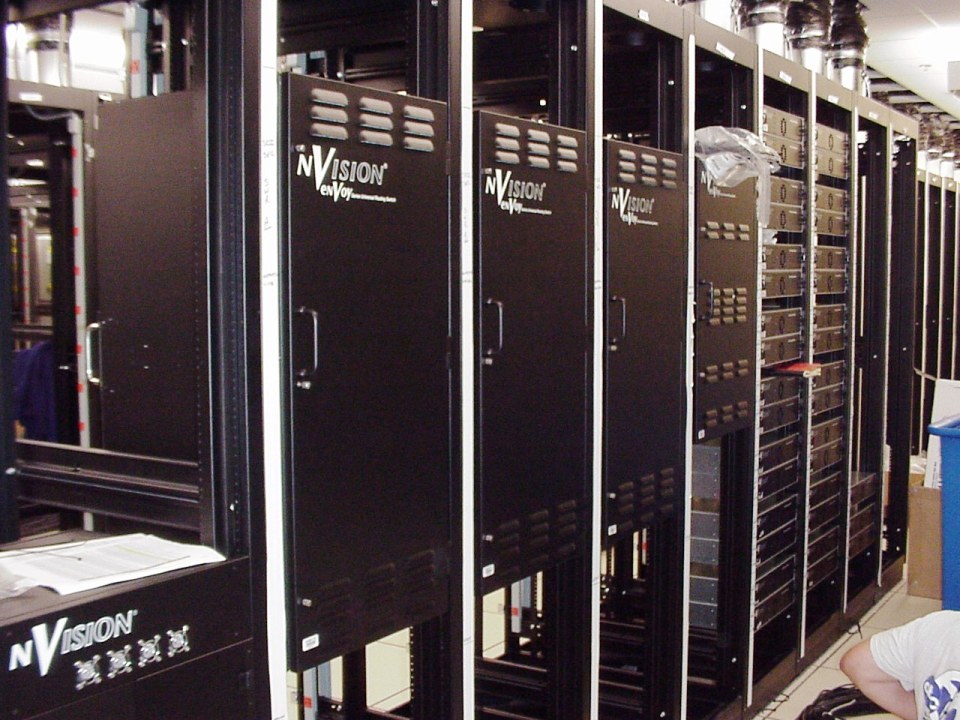
ABC, at the time, was in the process of accepting delivery of a NVISION router for KABC. ABC did not like ADC. NVISION did manage to sweet-talk ABC into taking it.
Meadlock walked away with 12 million in cash. The others no longer had founder positions, just stock options from ADC. When the ADC stock crashed right after the sale, Dayton watched $4 million drop to $100,000 in just four weeks.
Jay Kuca went to work for NVISION right after the ADC purchase, having given up on the Group. He almost immediately saw the misdirection that ADC was inflicting. It bought NVISION because they were in a similar market to ADC's. But that didn't mean they understood how that market worked.
From the start, ADC did not know what to do with NVISION. They shut down NVISION's marketing and sales teams. Then, they pushed their own sales team to sell in a market they didn't know. Bill Amos retired. Television and telecom are both high‐tech, but so is space flight. The ADC sales force wouldn't have done well in that area either. The company faced chaos while trying to combine its recent acquisitions. As a result, they constructed a 790,000 square‐foot building in Minneapolis, which ended up unused.
The plan aimed to provide complete solutions across telecom, TV, and broadcasting. However, no one on the ground knew how to achieve this.
Soon, the NVISION folks came to realize that their existence was in trouble.
Within a year, talks about what to do with NVISION by their overlords started. Tek was having the same discussions about GV. Miranda Technologies offered video infrastructure products like Grass Valley and NVISION. The company was headquartered in Montreal. ADC approached Miranda about buying the company.
For about a year, Miranda tried to buy NVISION from ADC. For NAB 2002, NVISION was a part of the Miranda booth. ADC realized that Miranda had no money at the time and was just trying to get the company for a low price. Unbelievably, ADC, not knowing what else to do with NVISION, just decided to shut it down. At the time, NVISION had over 40 technology patents, a growing reputation, and now it was facing extinction.