

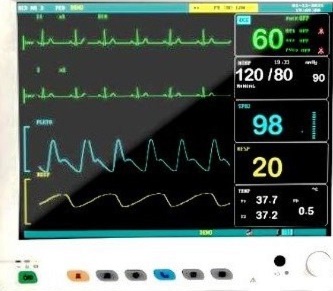
Many people, especially those of a certain age or fans of reruns, remember a familiar piece of test equipment from "The Outer Limits." The show's opening featured an oscilloscope that displayed the narrator's voice pattern. An early Simpsons Halloween episode parodied this. An oscilloscope display has two axes. Horizontally, it represents time, and vertically, the amplitude of the observed signal. Oscilloscopes come in many specialized types. For example, waveform monitors are used in the television industry. Automotive testers help troubleshoot vehicles. Heart monitors serve the medical field, among others. The traditional radar screen is a relative of the oscilloscope.
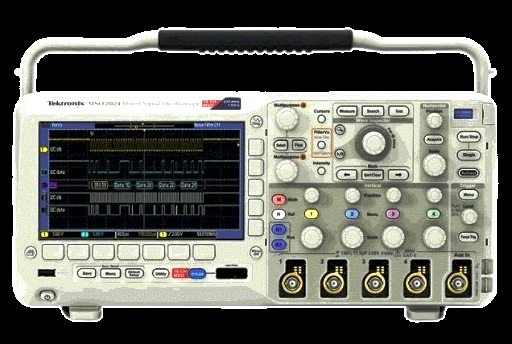
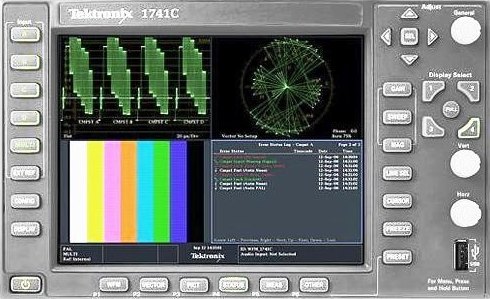
To quote from Tektronix itself: "Tektronix oscilloscopes and related test and measurement equipment have been a cornerstone of the electronics industry for nearly three quarters of a century. Engineers use Tektronix products to advance the state of the art. The oscilloscope enables visualization and precise measurements of electronic devices, circuits, and systems."
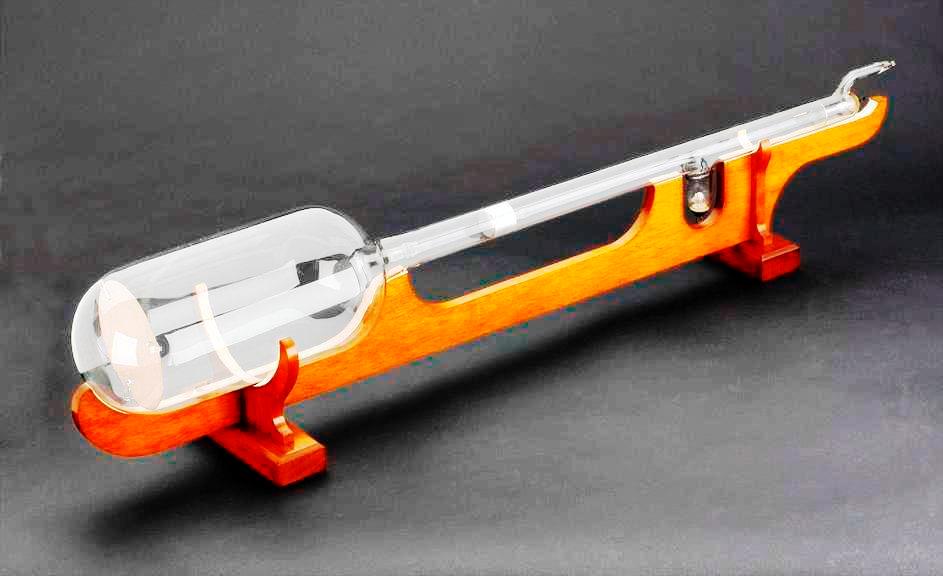
The oscilloscope, often called a "scope," was based on the Braun tube. This tube was invented in the late 1800s. The Braun tube evolved into the cathode ray tube (CRT). In 1899, Jonathan Zenneck added beam forming plates and a magnetic field. This setup let the beam sweep from left to right on the horizontal time axis. He also included a second set of plates to move the beam up and down while it swept horizontally.
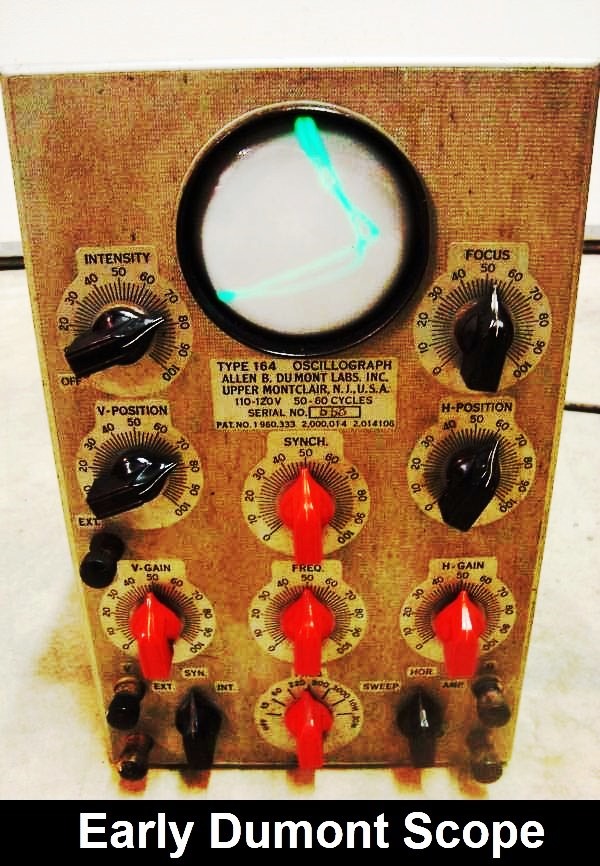
By the early 1920s, researchers began using cathode ray tubes in labs. These tubes were also being developed for video. They struggled to keep their internal vacuum stable, as air would leak in. For the beam to work, it needed a vacuum. Also, the cathode, which emits the electron beam, was not very stable. Zworykin started working on a sealed cathode ray tube with a thermionic emitter in the early 1930s. Zworykin worked at RCA. He is credited with much of the technology that made television possible. But it took Dr. Allen B. Dumont, who started a company in his basement in 1931, to make the oscilloscope happen.
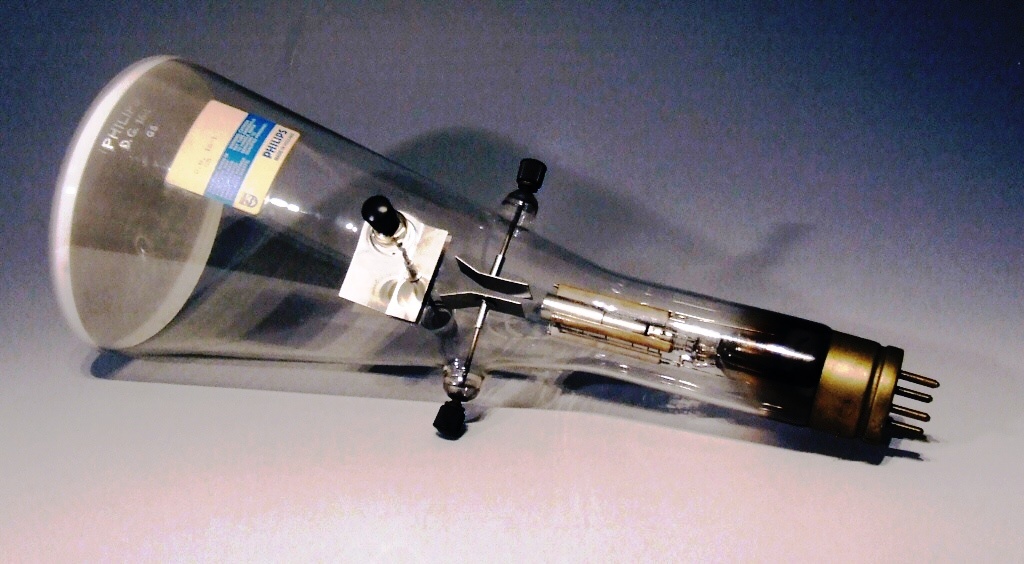
Dumont Laboratories improved the average CRT life from 24 hours to over 1,000 hours. This made television, and derivatives like the scope, possible. The company managed to beat RCA to market by almost a year with an all‐electronic TV receiver in 1938. Besides TV, by the 1940s Dumont was a leader in the field of test equipment with its scopes. The issue was that the company lacked the resources to compete with RCA and others in the new broadcasting industry and the electronic test market. Its lead in scopes slowly diminished, and in 1960, Fairchild Camera and Instruments purchased the remnants of Dumont after the Dumont TV Network and its equipment divisions closed down. The Dumont brand of scopes was sold until the '80s.
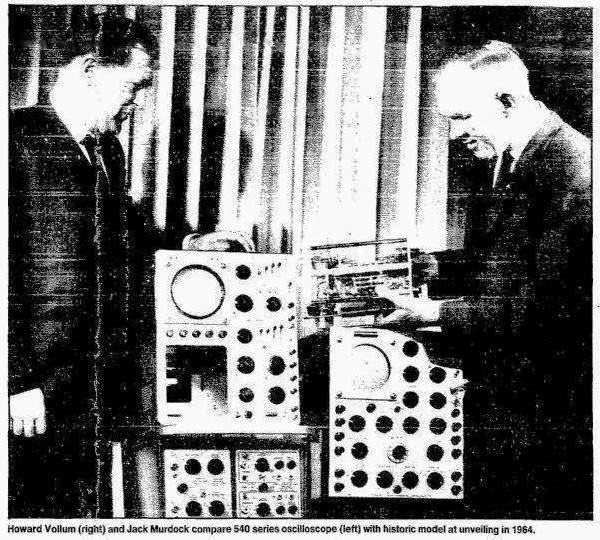
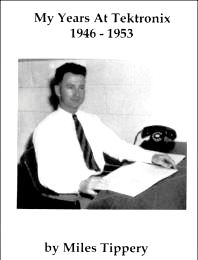
The eventual leader, both in sales and technology, in scopes was founded in 1945 near Portland, OR. The company was named Tektronix and was founded by four people. Charles Howard Vollum graduated from Reed College in Portland with a degree in physics. The school was small and far from the Ivy League, but it boasted over a hundred Fulbright Scholars, 67 Watson fellows, and three Winston Scholar alumni. After graduation, he ran a radio repair shop. It was located in the back of an appliance store. This store belonged to another Tektronix founder, Melvin Jack Murdoch. During the war, Vollum was involved with the radar signal corps. Murdoch, during World War II, worked in the Coast Guard as an electronic technician. The other two founders were Miles Tipperly and Glenn Leland.
Vollum was the president and Murdoch the vice president. The company began like Sony, another big tech player that started around the same time. As we saw, the Grass Valley story was later but similar. The Tektronix founders, like those of Sony and GV, didn't know what to sell. They simply wanted to make, sell, and repair electronic equipment. It was Vollum who decided that they would build an oscilloscope. It was designed using spare parts stockpiled by the partners during the war. The first one was as big as Vollum's workbench. Melvin brought in a Coast Guard machinist he knew to help downsize. This was finished in the spring of '46. It still weighed 50 pounds, but it functioned better than any other in existence. At the time, Dumont was the largest producer of oscilloscopes. Vollum once said Dumont just wanted to play with big‐time TV. They were also complacent about their oscilloscope. By 1947, Tektronix employed 12, and four years later had mushroomed to 250.
Why did DuMont fail with a 15‐year head start, and Tektronix not? DuMont founder Allen B. DuMont started with oscilloscopes and CRTs. He was also one of the first manufacturers of television sets. DuMont also ventured into broadcasting with the DuMont Television Network (1946‐1956). This stretched resources between R&D, consumer products, and broadcasting. Tektronix primarily specialized in test and measurement tools, especially oscilloscopes. They improved these devices, turning them into precise tools for labs, industry, and defense. It avoided dilution into consumer markets.
To support consumer TV manufacturing and network operations, DuMont needed massive capital. It turned to outside investors, notably Paramount Pictures. Paramount Pictures was one of the "Big Five" Hollywood studios. In 1939, Paramount invested in DuMont's television labs, taking a minority stake (about 40%).
Paramount took control but hesitated to fully fund the TV network. This held back growth. At that time, Paramount believed its real money came from film production, distribution, and its large theater chain.
In the 1930s‐40s, the government scrutinized the studios for monopoly power. In 1948, the government made Paramount Pictures sell the theaters it owned. The theater group, called United Paramount Theatres, later gained control of ABC.
Paramount Studio executives were careful about investing more in broadcasting. They worried it might seem like they were expanding their monopoly power. To make matters worse, DuMont had no radio network and a disappointing lineup of affiliated TV stations. Added to that, Paramount owned two key TV stations outright (KTLA, Los Angeles, and WBKB, Chicago). Instead of putting them into DuMont's network, it treated them like Paramount properties. That deprived DuMont of major market coverage.
So the bottom line: Paramount never fully supported DuMont because it was focused on film and theaters. Second, it feared government antitrust scrutiny. For that second reason, it wanted to keep its own TV stations independent. It also didn't want to accelerate the threat that television posed to the movie business.
DuMont launched before ABC got into television. It even aired early hits like Captain Video and Jackie Gleason's Cavalcade of Stars. But by the mid‐1950s, DuMont was squeezed out of everything.
DuMont spun off its last stations, WABD New York and WTTG Washington, as "DuMont Broadcasting." This later became Metromedia and formed the backbone of several Fox‐owned stations.
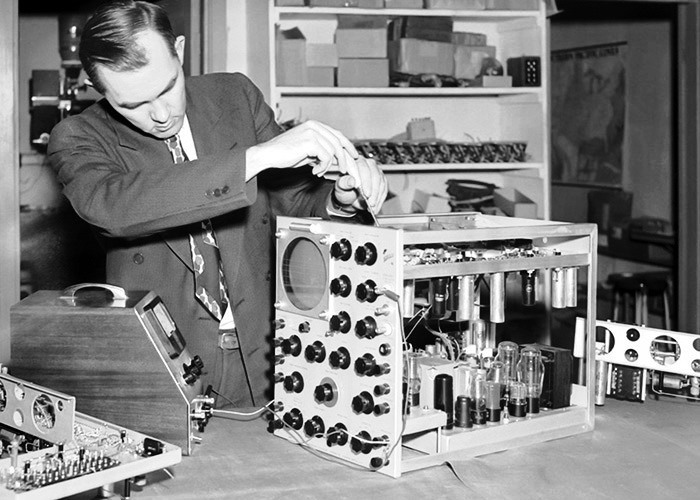
The first Tektronix oscilloscope, which the company came to be known by customers as simply Tek, was the 511. In a short time, it was a success, bought by other major technological companies. By 1950, they had the 517, which was the seventh generation scope. In 1947, their sales were $27,000. The next it shot to $250,000, and by 1950 it was over $1 million. At that time they had a backlog of orders almost a year long. Early customers were HP, Philco, RCA, Westinghouse, AT&T, and Bell Labs. In 1948 they made their first overseas sale to L. M. Erickson, which was a Swedish telephone company. By 1956 Tektronix was the scope king. Many of their developments and inventions appeared in competitors' products. That including those still being sold by Dumont.
In the early 50s, Murdoch began to lose interest in the company. He took up flying and even started an aircraft sales business on the side. In the company's early days, he promoted a "Tek" culture. This culture had no perks for executives and encouraged a family atmosphere. Everyone used first names, and the staff was kept as small as possible. Although Tek paid lower wages, it offered better benefits and had profit‐sharing. There were a few unbreakable rules. Employees were urged to pursue their interests. At one point, the company's culture received praise. The company drew inspiration from HP. Its founders, Dave Packard and Bill Hewlett, established "The HP Way." HP began with a goal to build electronic products, but they delayed deciding what to make. Sound familiar? HP's first product was an audio oscillator. The founders made it more stable using their technical insights. An early customer was Disney, who used it in the making of the movie "Fantasia."
The HP startup case study, while not naming the company, is often seen as a clear recipe for failure in many MBA classes. In HP's case, it wasn't a product or its rollout that made the difference. It was the engineering culture they built from the start. HP urged its engineers to dedicate some time to "skunk work" activities. This allowed them to explore ideas that excited them. Founders often wandered through the engineering caverns. They would stop at an engineer's workstation or bench. There, they looked for a breadboard, box, or any object that caught their eye. They would ask about it. The engineer often tried to show how their idea could change the world or save humanity. Most times, those efforts didn't work out. But once in every thousand stops, a new product idea would emerge.
Engineering, like many fields, has a strong drive to make an impact. They feel a deep urge to create things that could change the world. Even better if you work inside an organization that covers the overhead and keeps you fed and warm. Many companies over the years started and grew large with this philosophical concept. HP, Sony, and Xerox, to name a few current survivors. The larger a company gets, the more hubris sets in. Meeting quarterly earnings grinds down the grand goal of bettering humanity. Tek, at the beginning, borrowed the same concept that HP managed to keep far longer than most. Murdoch was originally Tek's "HP Way" cheerleader.
Vollum led the company in basic engineering. He focused on practical solutions, not philanthropy. He began the internal manufacture of CRTs to get the quality that he wanted. In 1954, he created plug‐in modules for oscilloscopes, like the model 530. This made it easy to adapt the scopes for different uses. In 1955, one‐half of all oscilloscope sales were the 530.
By the early 60s, company sales reached $43 million. By the decade's end, the company held 75% of the oscilloscope market. Their total sales in 1969 were $148 million. When it came to scopes, they were beating HP by a large margin. HP was known for its high‐end test equipment. Their designs often felt stylish, but sometimes they seemed a bit over‐engineered. Tek was the "working man's" choice for reliable test equipment. It got the job done without breaking the bank for management. This was important because, in the television industry, management often prefers to spend money only on what directly affects the final product. They tend to overlook the tools needed to maintain a program's technical quality.
Soon the baggage that comes with getting large set in. In the early 60s, Vollum convinced the Board to make Bob Davis the executive VP. Vollum wasn't ready or willing to put in the needed management effort to run the day‐to‐day operations. Davis had been in charge of manufacturing from 1954 to 1958, and he brought order to the operation. He still reported to Vollum. Davis was energetic, and initially he was viewed as a positive step. But even by then there had developed an old guard that did not welcome change. They came to be known as the "old scope warriors." Though Davis saw strong growth and the first foreign subsidies begin, the old guard won out. Already, the company was finding it difficult to branch into new areas of business. In 1962, Vollum was persuaded to retake control. A tech company that struggles to innovate won't stay relevant for long. But at that time Wall Street liked Tek's polished approach, especially in the late 60s. It became a favorite among investors.
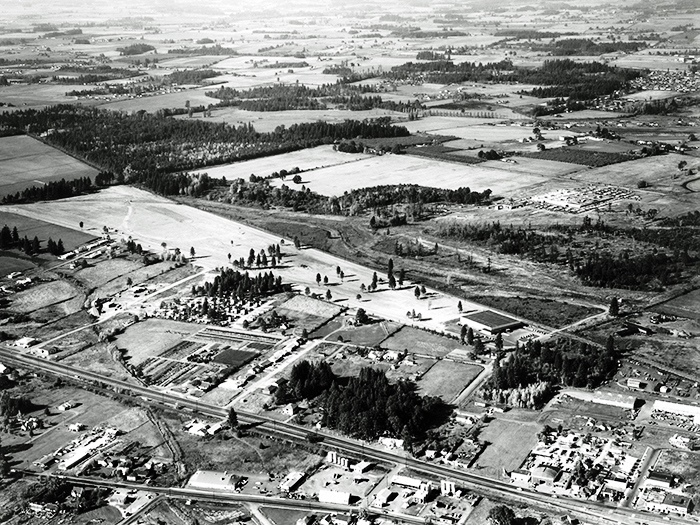
In the 60s, the company built a new 300‐acre complex in Beaverton, OR. In 1963, the company went public, and in the next year, it was listed on the New York Stock Exchange. Vollum told Forbes that "there will always be a growing need for scopes. Wherever electronics go, the oscilloscope goes also." Over time, Wall Street changed its view on the company's future. It was not pleased that the company relied heavily on oscilloscopes. Computers began to be developed enough to mimic many testing tasks that scopes performed. Before that, most electronics required an oscilloscope for design, testing, and troubleshooting. After over 20 years since its founding, the company lacked marketing experience. The oscilloscope sold itself by being better and cheaper than its competitors. At the end of the '60s, competition grew from a new set of companies: computer manufacturers.
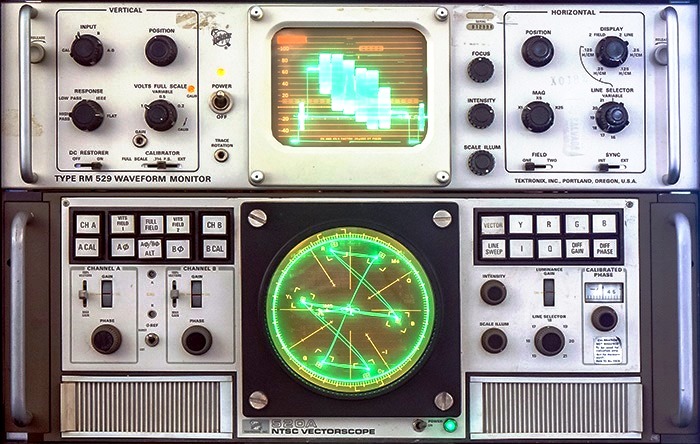
The scope business wasn't going away anytime soon. After a major setback in '71, it kept growing. The setback? In May 1971, a huge fire raced through Building 58 at Tektronix's main campus in Beaverton, Oregon. The building included parts of the oscilloscope production line. It also had assembly areas and storage for sensitive components. Fire suppression systems at the time couldn't manage solvents, plastics, and delicate parts. This led to the loss of millions in equipment, work in progress, and inventory.
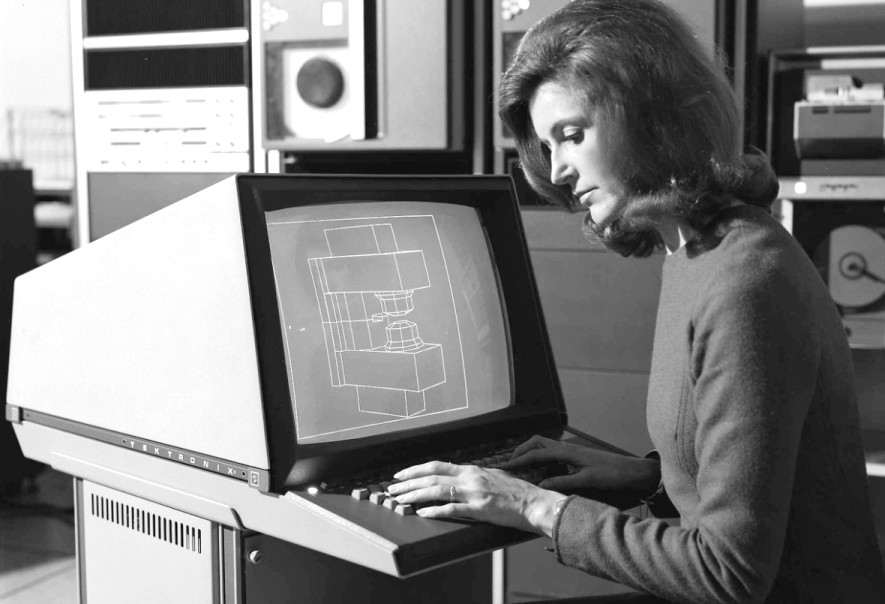
One of the businesses Tek had gotten into was computer terminals. At that time, computers like mainframes and mini‐computers lacked video outputs and keyboards. You needed an intermediary. That is where these terminals came in. They converted keystrokes into ASCII data for the computer to interpret. They received ASCII data back to turn into a display. Tek wasn't doing well in this area.
Earl Wheatland, the executive VP, was tasked with reorganizing the Informational Display Group, which included terminals. The goal was to redesign the terminals to cut costs. When it was reintroduced in 1971, the price was $4,000 instead of $10,000. The timing for marketing improved because computer‐aided design was on the rise. The company's terminals matched perfectly.
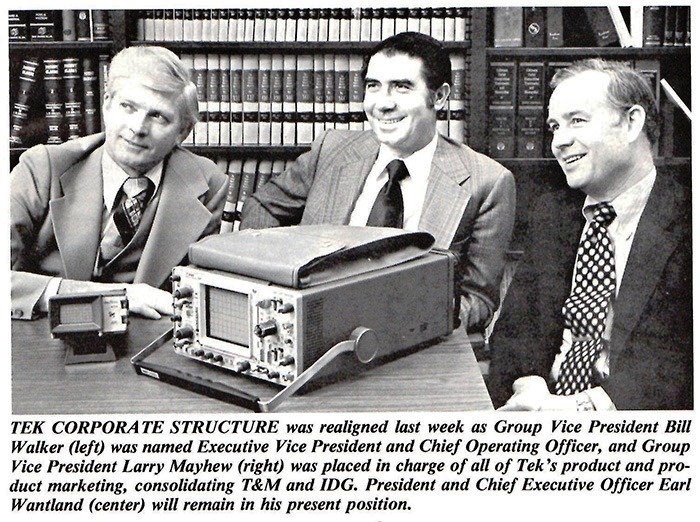
About this time, Tek started looking to buy its way into diversification. Earl Wheatland, the new company president, replaced Vollum. In spring 1973, he called Donald Hare to discuss a merger. He suggested a stock swap between Tektronix and Grass Valley. No money would change hands, so it qualified as a non‐taxable exchange. Hare knew Paul Vollum, the founder, quite well. He knew Vollum started the company with just over $10,000. From that small amount, Vollum built a great oscilloscope. Grass Valley seemed like a good fit. GVG sales the year before were $4.7 million, with earnings of $1.066 million. Total employment at the end of 1972 was 130. The acquisition was claimed to help strengthen Tektronix's capabilities in the TV market.
The officers of the Group held 52% of its stock. So, it was pretty clear that the stockholders would approve the 2/3rds needed. Soon the deal was settled. Wheatland said the Grass Valley acquisition would be a newly formed Tektronix subsidiary.
There were 500,000 shares of Grass Valley stock. On August 10, 1973, Grass Valley stockholders received one share of Tektronix stock for every 3.2 shares of Grass Valley they owned. The closing price that day for Tektronix was $40.375 on the NYSE, and $10.50 for Grass Valley on the AMEX.
Not everyone was on board initially. Some ABC engineers who were Grass Valley stockholders were not happy. They worried the Group might turn into just another Tek division under new management. They feared the larger company would create barriers to innovation. Julius Barnathan, head of ABC engineering, called Tek about their concerns. La Verne Pointer, an engineering manager at ABC, said, "When we had an idea we'd call up or go out and see Bill Rorden. Bill would take out an envelope, ask some questions, and make some notes. And we'd hear from him right away. Not weeks and months later. We didn't want to lose that." In response Tek appointed early group members Rorden, Cobler, and Sakai as Vice Presidents of the Grass Valley subsidiary.
Tom Long, the General Manager of the Tektronix Communications Division, also became President and Chief Executive of Grass Valley. He also kept his role in Beaverton. The Grass Valley Group was part of the Tektronix Communications Division. This division made terminal and test equipment for the television industry.
By the mid‐70s, Tek had become Oregon's largest employer. Employee growth continued into the 80s to over 20,000.
Hare noted that during Grass Valley's time as an audio company, it had many competitors. These "slocky" companies produced low‐cost items and made slim profits. He found that the video industry had more "stupidity." People there paid much higher prices than those in audio. The Group could create video products for half the cost. They could then sell them at twice the price of audio products. Bill Rorden once noted that the video industry had more ignorance than the audio industry. So, the Group decided to capitalize on this gap.
Part of the Groups' rise came from not knowing the "conventional wisdom" that guided the entrenched early on. In the last chapter, we saw that when ABC needed a new vendor for a processing amplifier, or proc amp, Hare asked, "What the hell is a proc amp?" They quickly produced one. We've shared how RCA wanted to license an early product. Hare dismissed their offer. He thought it was pointless because it would take RCA two years to push the copied GVG product through their long process before final shipment. Hare said GVG would be two years farther ahead of RCA than it was then. This was at a time when the Group barely had the rudimentary test equipment needed. Remember, early on they used modified TV receivers as video monitors. Yet, from a modest start, they did some amazing feats of engineering.
But things change, and the sale to Tektronix brought change. Hare was asked to stay on for two years as a manager. This was aside from the written merger agreement. During this time, the new management from the parent company would observe and gradually take control. Dr. Hare quickly shifted from the heart of Grass Valley. Soon, he wore a consultant's hat. He soon found that the new leaders didn't want his advice. Hare received one description of his management role. However, the overseers sent from Tek had a different view of what they expected from him. That situation did not last long, and Hare stopped physically showing up.
It soon became clear that Hare did not fit into Tek's long term plans, so he retired
Tactical operations went on with the Grass Valley VPs. Meanwhile, Tek veterans took charge of the strategic vision.
Donald Hare returned to flying. He and Hazel got to know the Phoenix area and settled there. They discovered a home on Mummy Mountain in Paradise Valley. It had three key features: a safe spot for their dogs, a spacious workshop and lab area, and a room that could become a climate‐controlled wine cellar. Tektronix let Hare take his whole research bay. This included the instruments. Tek moved everything to Arizona, along with their furniture and wine collection. They decided to stay busy by taking computer programming lessons at the local college. They also signed up for Spanish lessons with a private tutor. They also traveled. One trip was a twenty‐day boat trip down the Colorado River through the Grand Canyon. When Hare found out they could only bring a limited amount of luggage, he measured out twenty days' worth of his daily J & B scotch ration.
The Hare's activities were briefly slowed by surgery. Dr. Hare needed an aorta section replaced due to aneurysms. They flew the Concorde to Europe after recovering. Then, they spent time in Spain to test their Spanish skills. He wanted to improve what he found. He thought there wasn't a good textbook on Spanish grammar, so he decided to write one.
He became a strong supporter of Hillsdale College in Michigan. He backed the college's fight against government interference. Hare had hearing issues and tried using active electronic filters. These filters changed the frequencies of certain sounds. This made the sounds clearer instead of just making everything louder.
His entrepreneurial spirit stayed strong. He sought out promising startups to guide and support financially. He looked into redesigning golf clubs with a pro golfer. He asked Bob Robertson, the author of his autobiography "The Inscrutable Dr Hare," to find promising engineers eager to start their own companies. They found some promising candidates, like the golf club idea. However, deals were never finalized because of disagreements about who would control the proposed startups.
Hare stayed active until his passing on Christmas Day, 1984. Dr. Hare died while sitting at his computer. He was 77. That was the same year that the Group celebrated its Silver Anniversary.