
RCA's role was unique because it was the heart of the broadcasting industry at its peak. It built transmitters, cameras, switchers, microphones, and audio gear. It owned NBC, giving it content and distribution. At first, in the 1920s, RCA was just a patent-holding company owned by GE, Westinghouse, and others. It had vertically integrated R&D, manufacturing, training, content, and infrastructure. It provided a complete broadcast ecosystem. No other company did it at that scale.
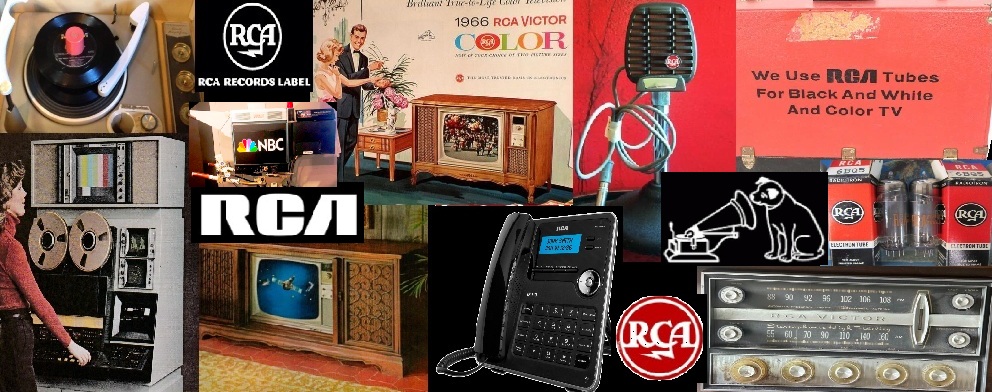

Why RCA fell and why no one filled the void. GE dismantled it starting in 1986 after it bought it. When GE bought RCA, they believed they were gaining a strong brand. They also expected significant engineering and distribution power with their acquisition. But RCA as a company and brand were already in decline. GE gradually saw that they focused only on what they understood, such as NBC and defense. The rest, like broadcast equipment was sold off or closed.
By the 1990s, broadcasters no longer bought everything from one vendor. Stations became modular, buying best-of-breed solutions, not a suite from a single vendor. Japanese (Sony, Ikegami) and European firms (Thomson, Bosch, BTS) became dominant. U.S. manufacturing couldn’t compete on cost or innovation speed.
It was a time when consolidation and fragmentation were occurring at the same time. Sony, Harris, Thomson, Belden, and Grass Valley all tried to be "the next RCA." The problem was that the market no longer supported a single‐supplier model.

In addition, there was the shift to digital media, heavily controlled by software. IT workflows such as Avid, Adobe, IP video, and SaaS made the old hardware‐focused RCA model outdated.
Sony dominated broadcast cameras and production but lacked full infrastructure control.
Thomson bought Grass Valley and other companies. They tried end‐to‐end solutions but faced financial struggles. As a result, they were broken up.
Harris, later rebranded Imagine Communications, bought Leitch and others to consolidate broadcast tech.
Belden, again with Grass Valley in tow, forced a merger with Miranda. This had great potential, but the media and video business lacks steady quarterly earnings. Sales in this area spike based on a few events. Format or technology changes. Think analog to digital, SD to HD, etc. Regulation changes that mandate new equipment. Not too surprising is sports. Every four years the latest and greatest for the Olympics. Or when major sports teams and leagues auction off new rights. Belden is a conservative company. It struggled to manage the ups and downs of this business. So, it eventually decided to divest.
A very large graphic of the Grass Valley story can be found here.
On it you will find that early corporate DNA comes from GE, Bosch, Bell & Howell, the Salt Lake City Tribune, Telemation, and Philco.
Recent corporate DNA infusions come from several sources. These include Tektronix, Comark, and Snell & Wilcox. They also have Quantel, Pro‐Bel, and Chyron. Philips, Dubner, and BTS are part of the mix too. Lightworks, Trilogy, and Vibrint contribute as well. Finally, Alamar, Pinnacle, Thales, Technicolor, Canopus, and Parkervision round out the list.
Recent additions to the gene pool include NVISION, Telecast, Juniper Networks, OmniBus, Tripwire, Miranda, and Belden. But Belden is not the end of the story.
Now, it is owned by Black Dragon Capital. They invest in Financial Services, Real Estate Services, and Systems and Information Management.
It should be pointed out that while EVS, Vizrt, Ross each carved niches, none became a one‐stop shop.
Modern media is fragmented and software‐driven. Integration today relies mostly on APIs and software stacks, not on common hardware. Vendors now focus on specialization, not vertical monopolies. And most importantly, broadcasters have become fewer and leaner, reflecting changes in budgets and business models.
The line an early boss I had was "If RCA doesn't make it, we don't need it" made perfect sense in the 1950s‐1980s. Back then, RCA set the standards. But the industry evolved. Today, the mindset is more like:
"If it works with NDI, or SMPTE 2110, and fits our workflow, we'll use it. No matter who makes it."
What exactly happened to RCA.
